• Skip to primary navigation
  • Skip to main content

Jack Walton

Home on the web

  • Home
  • Read
  • Music
  • Collaborate
  • About
  • Show Search
Hide Search

Archives for May 2023

Tools vs contexts

Jack Walton · May 22, 2023 ·

I was reading Amos Tversky’s classic paper, Features of similarity (1977) this morning, and for some reason it reminded me of Quentin Blake’s also classic children’s book Mrs Armitage on Wheels.
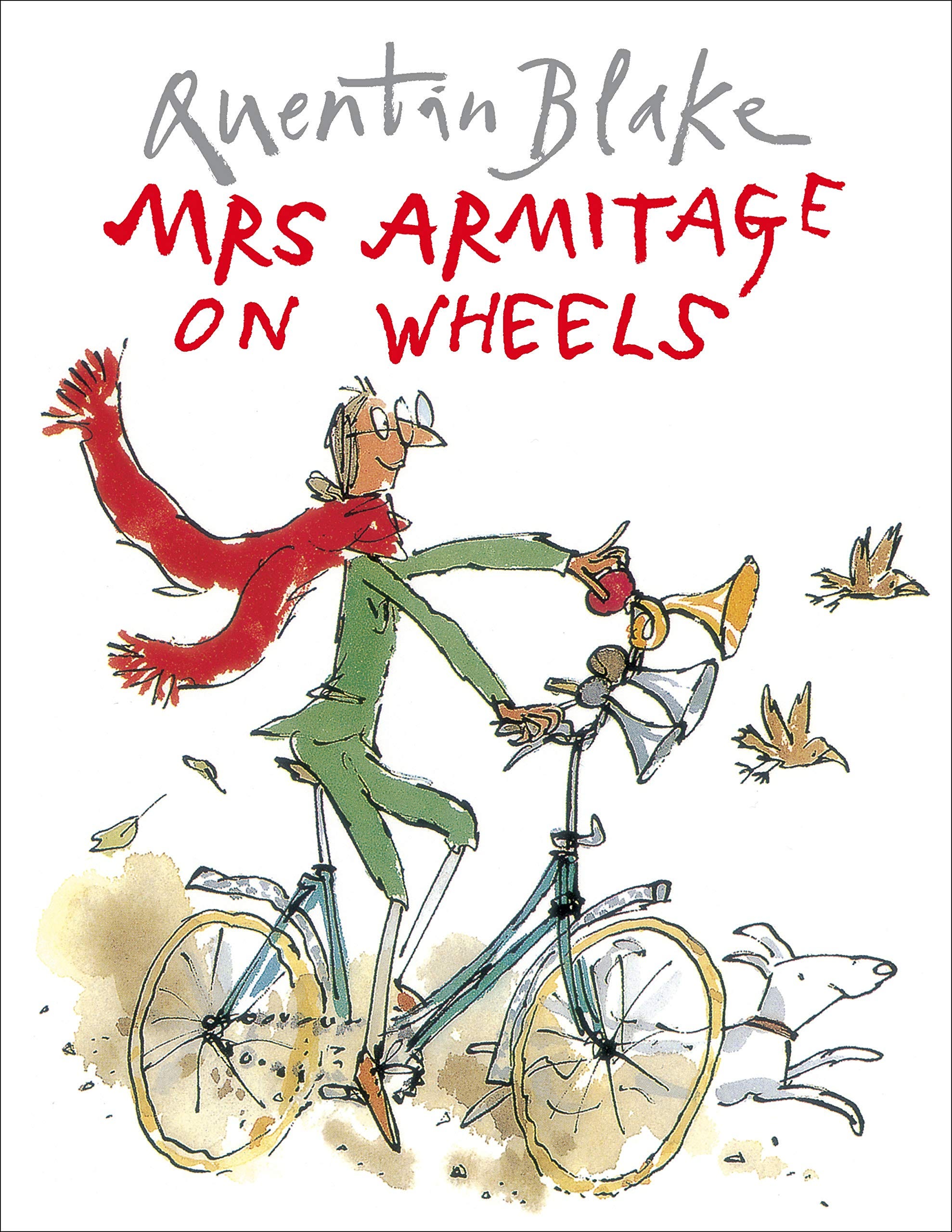
The cover of Quentin Blake’s book is more colourful than that of Tversky’s paper

In their own ways, both of these pieces of literature might lead us to ask: When is it better to work on creating a new context?

A ubiquitous feature of human practices is that they involve tools. We use tools to various ends, including to help us make things, and to provide information of some sort (an evaluative function). When an upgrade of some sort comes along, we may trade one tool in for a better alternative.

Under what conditions does it make sense not to focus on changing the tool, but the context? I feel as though this might apply in situations where tools suffer from a problematic premise—this is how I currently see rubrics in educational settings; better rubrics still have the same underlying technological issues. To effect meaningful change in a field like education, it might not be sufficient to focus on tools.


When does an error present as such?

Jack Walton · May 21, 2023 ·

When is it clear that a response to a situation is an error? Sometimes the stakes mean this is an obvious line (e.g. in a surgery, or a lawsuit), but there is often a considerable grey area between good and bad. A ‘response’ isn’t necessarily defined as an instance in time—sometimes things drift into error slowly.

Three kinds of performance evaluation problems

Jack Walton · May 20, 2023 ·

An evaluative performance problem can be thought of as a situation wherein there is a concern with the quality of a given performance. Performances seem (usually) to count as performances when there is some amount of human buy-in—otherwise naturally occurring things can come to be understood as performances when an analyst decides that the thing in question is worthy of attention.

How, then, to distinguish between various kinds of performances?

One way is through tense:

  1. The concern could be with evaluating a past performance—say, a recital of a piece of music by a student, or a restaurant experience we’ve just had.
  2. The concern could be with evaluating a presently occurring performance—say, we are in the middle of dinner at a restaurant and form a view about our experience as it is unfolding (or perhaps we are in the kitchen, appraising the efficiency of our staff).
  3. The concern could be with evaluating a future performance—say, we are picking members for a team that will need to compete in a future sporting event.

Within the model above, the evaluative gaze could be directed at various components of the situation, including the performer as distinct from the performed work (e.g. a plate of food that arrives at our table).

It is also worth noting that the purpose of the evaluation could be multifaceted—it could be about improving future performance, making a rating for certification reasons (e.g. to award a restaurant three stars), or some other reason (including forming conclusions about the future; e.g., whether we’d like to eat at that restaurant again).

Different disciplines seem suited to different aspects of the game outlined above (e.g. deliberate practice might be good for enhancing future performance, but no so helpful when the concern is with the here and now).

On titles

Jack Walton · May 19, 2023 ·

Pink mountains with clouds

I’ve discovered that I like barebones titles; the kind that describe the basic ingredients something is made from—a bit like the way some restaurants label their dishes.

Sticky peanut, coconut, chilli, and lime leaf.

I have a rough idea about what this might be, but there’s no way to be sure. I know I like all of the ingredients listed, but there’s still plenty of room to be surprised as well.

Spanner crab, coriander, lemon, and applewood smoke.

I pulled those words out of the air, but I can picture what it might be about.

Story titles can get away with this too; The Overcoat (Nikolai Gogol); A Clean, Well-Lighted Place (Ernest Hemingway); American Gods (Neil Gaiman).

This doesn’t work so well for research papers, but still seems to hold for books. Why is that?

Design and selection

Jack Walton · May 18, 2023 ·

What’s the difference between making things and finding things?

In some contexts, we are presented with situations that involve selecting the best possible things from existing options—it could be picking a course to study, players for a team, or a restaurant for dinner. In these situations, we are informed by our impressions of the quality or skill of the selectees.

In other situations, the emphasis is on making something from closer-to-scratch—sitting down to write one of these posts is a good example.

Decision-making seems to be different in both contexts (or perhaps, relative to both contextual emphases). When the issue is to do with selection, part of the challenge is in being able to perceive the right pre-existing characteristics (an exercise in evaluative judgment). In design scenarios, success seems more about being able to suspend judgment to enable something useful to emerge, almost as a function of probability in combination with latent situational characteristics (e.g. person, environment, state of mind, amount of coffee—things that include but are not limited to psychological characteristics).

The above is a little too dichotomous for my taste. If my experiences trying to write papers or produce music are any indication, a seesaw is a better metaphor for the interplay between design and selection. As soon as we produce something, the evaluative gears start turning. Being able to exercise the right state at the right time seems a practice worth figuring out.

  • « Go to Previous Page
  • Go to page 1
  • Go to page 2
  • Go to page 3
  • Go to page 4
  • Go to page 5
  • Go to Next Page »